Description
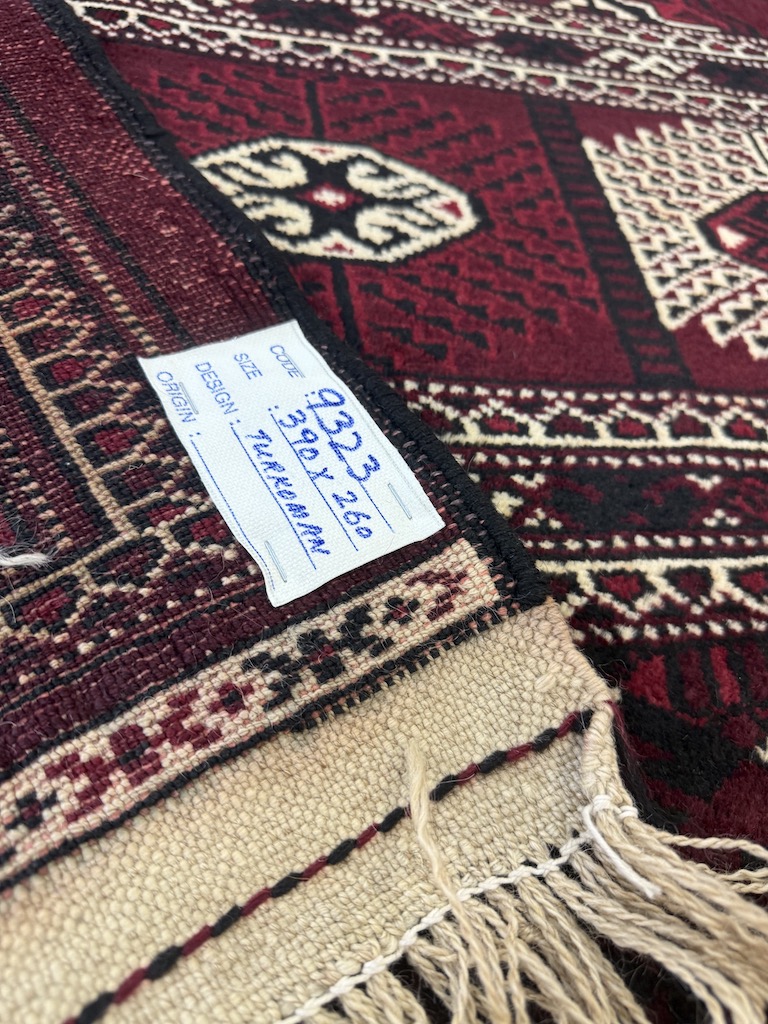
This magnificent vintage handmade carpet from Ashkabad (Ashgabat), Turkmenistan is a beautiful expression of the great weaving traditions of Central Asia. Carpets of this general Turkmen tradition were historically known in the international rug trade by names such as Bokhara, and at times “Russian Bokhara,” particularly when Central Asian carpets reached Western markets through territories of the Russian Empire. Strictly speaking, however, Bokhara was largely a trade name rather than the name of a particular Turkmen tribe or weaving centre.
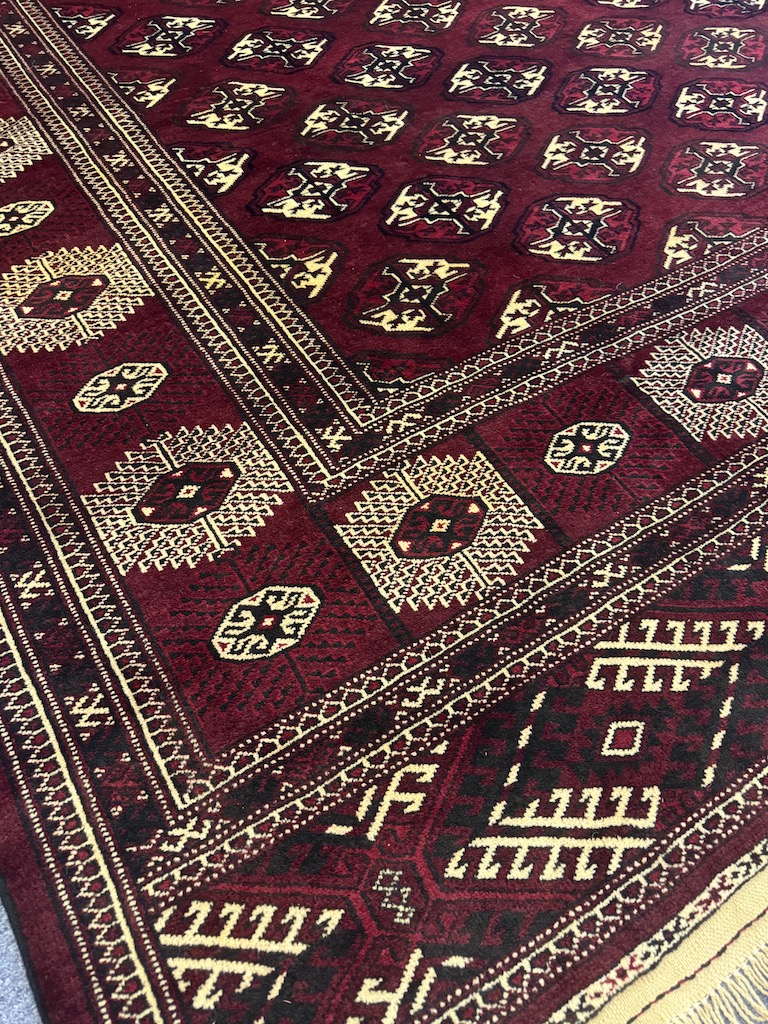
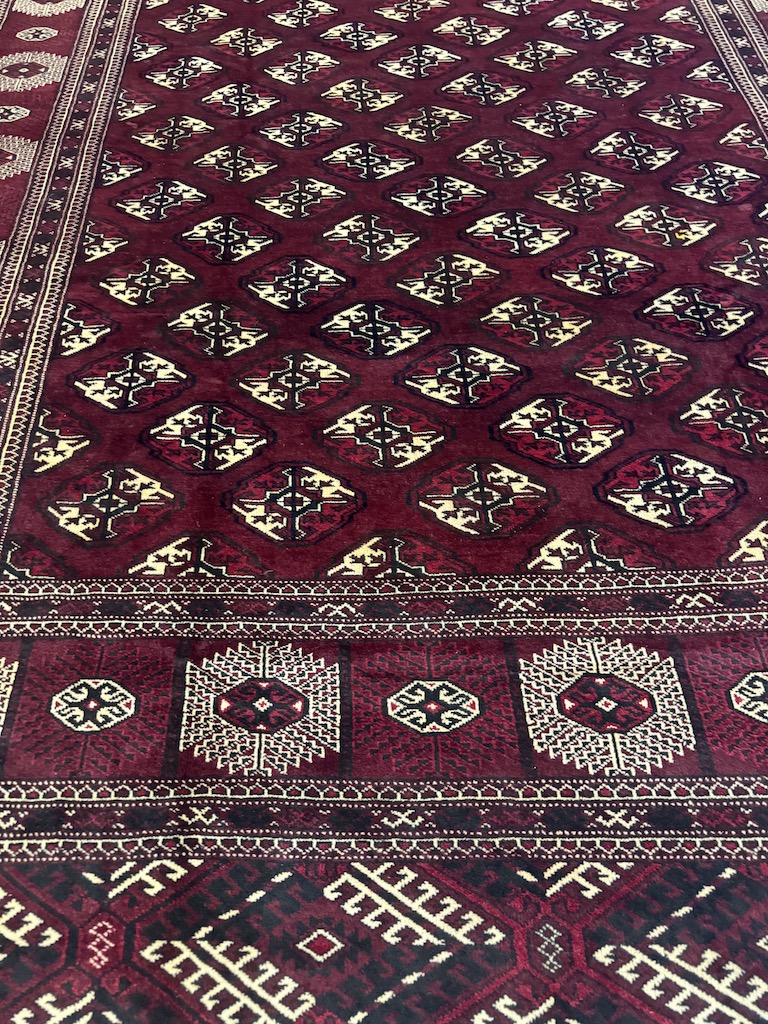
The carpet is woven from fine mountain sheep Karakul wool, traditionally valued for its strength, warmth and rich natural character. The wool has been hand-spun, giving the pile subtle variations in texture that distinguish a genuine handmade carpet from mechanically produced rugs. Particularly beautiful is the soft natural sheen visible across the deep red field. This lustre is associated with the natural oils, including lanolin, retained in good-quality wool, allowing the surface to change gently in appearance as the light falls across it.
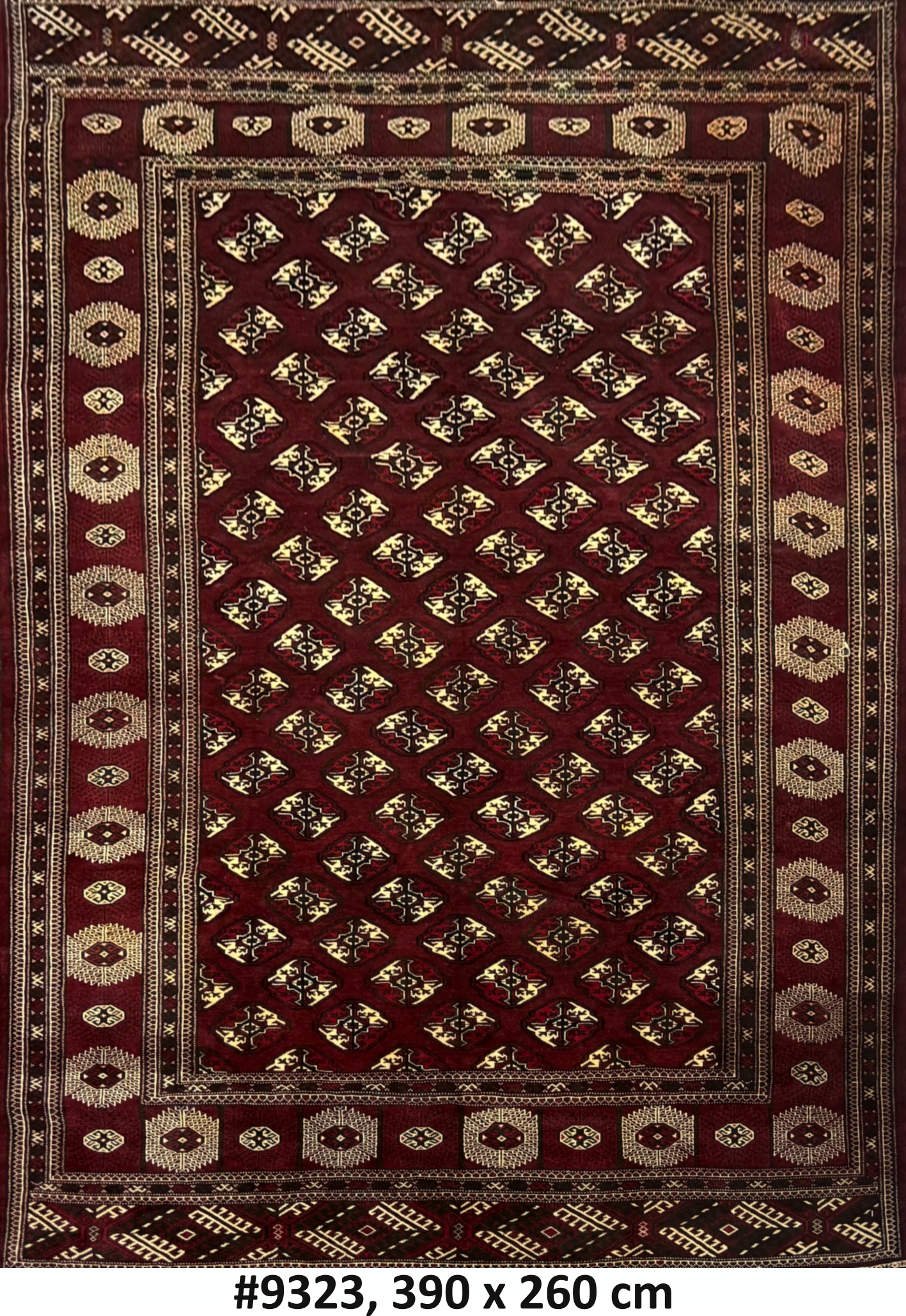
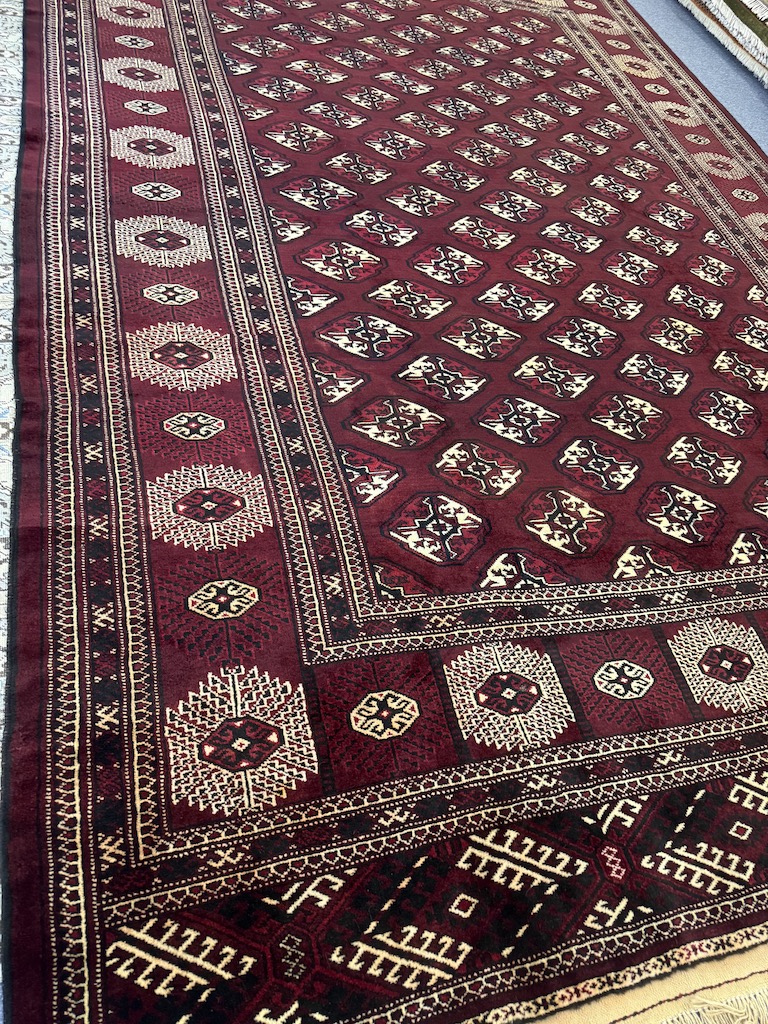
Its colours have wonderful depth. The dominant field is a mature madder-like burgundy and wine red, complemented by ivory, dark brown, black and touches of muted red. Traditional Turkmen weaving is especially associated with rich red grounds, and historically local wool and vegetable or other natural dyes played an important role in the weaving tradition. In this carpet, the ageing of these colours gives the surface a warm, mellow character rather than the uniform appearance of a newly manufactured rug.
The Repeating Gul Design
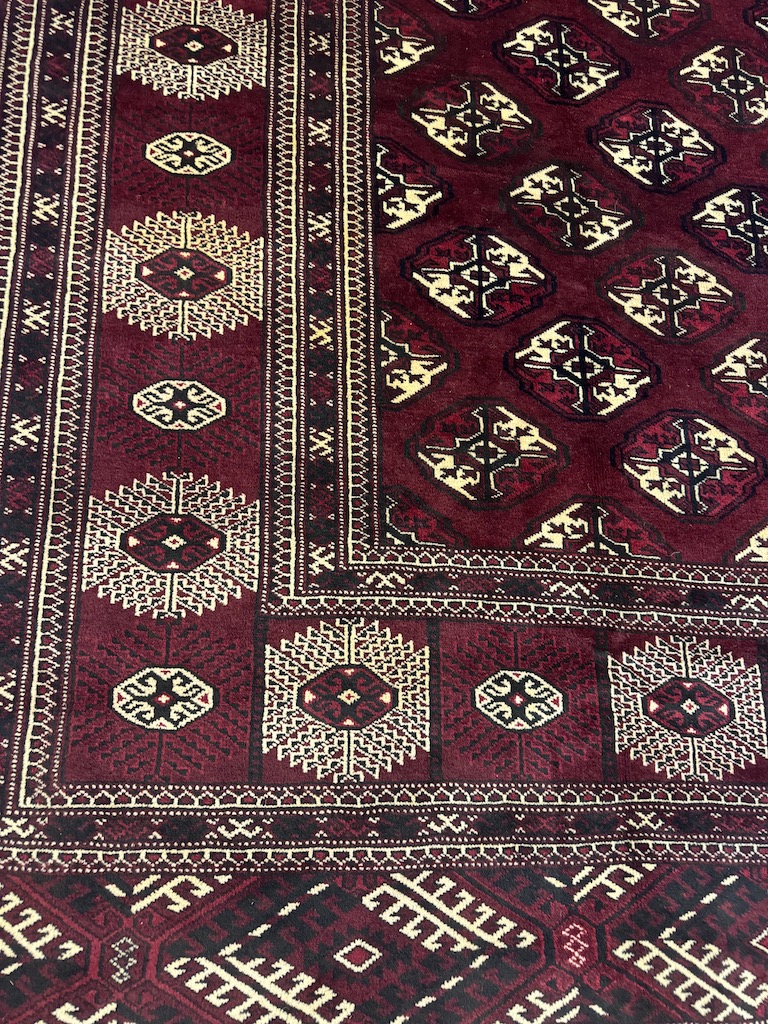
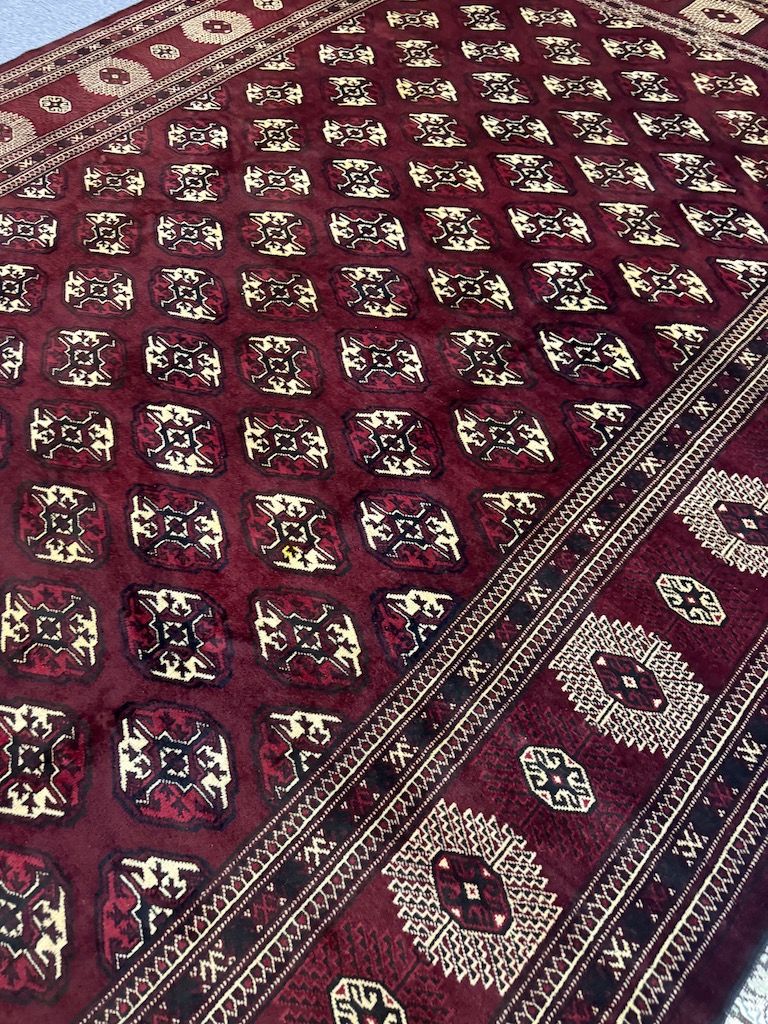
The most striking feature is the extraordinary rhythm of repeating geometric guls covering the central field. The gul—also written göl or gol—is one of the defining elements of Turkmen carpet art. These medallion-like geometric devices were traditionally repeated across the fields of Turkmen rugs, with different forms associated with major weaving groups such as the Tekke, Saryk, Salor, Yomut and Ersari. Importantly, scholars caution that motifs could pass between tribes, so the gul alone should not be used to make an absolute tribal attribution.
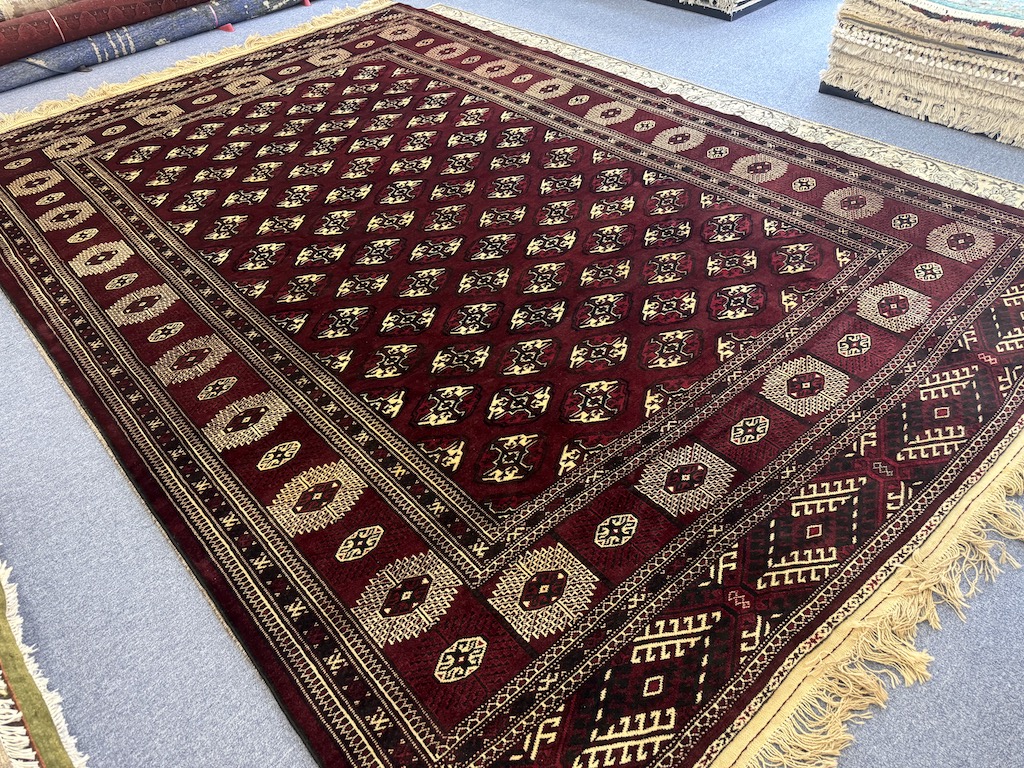
Here, the field is arranged in disciplined diagonal rows of diamond-shaped, hooked tribal guls, creating an almost hypnotic sense of movement. Each gul contains a complex internal geometry of ivory, dark brown and red forms. From a distance the pattern appears wonderfully ordered; when viewed closely, each motif reveals the small variations and irregularities that give hand weaving its personality.
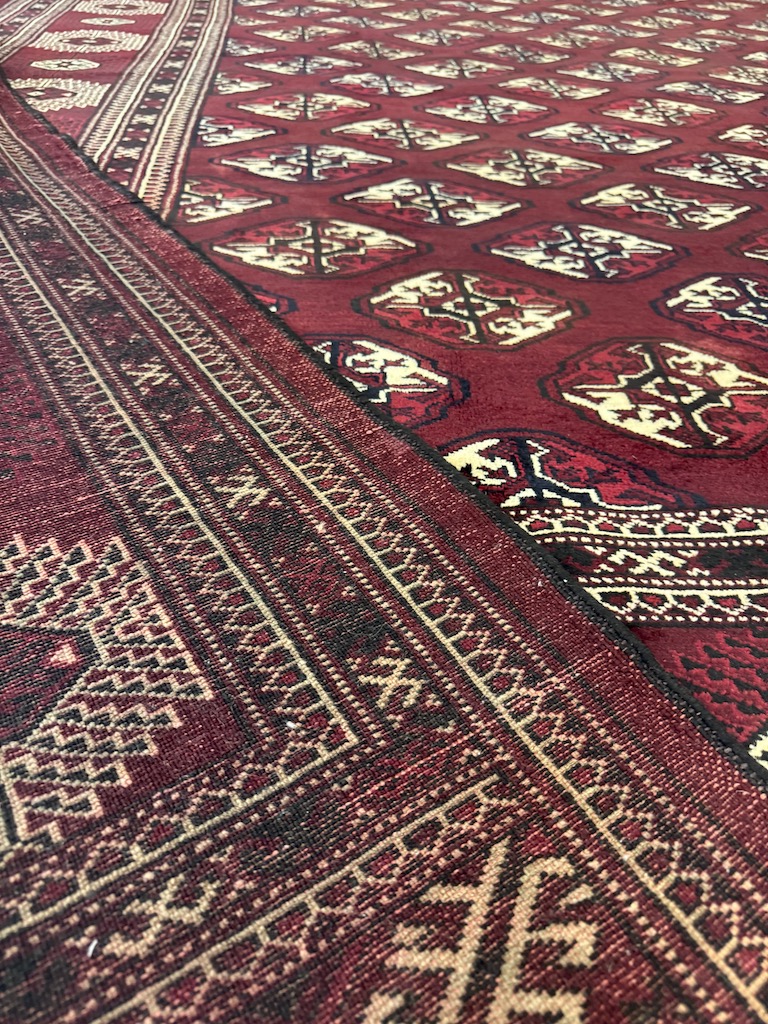
The design may be described commercially as a Saruk/Saryk-inspired repeating gul design, although an exact tribal attribution would require examination of the rug’s structure, knots, foundation, selvages and back rather than the photograph alone. This distinction is important because historic Turkmen carpet scholarship increasingly relies on structure, materials and colour in addition to ornament when identifying tribal origins.
A Remarkable Border Composition
The borders are particularly impressive. Instead of relying on a single decorative frame, the weaver has created multiple layers of narrow guard borders surrounding a broad principal border. The repeated ivory geometric forms against the burgundy ground echo the central guls while giving the carpet a strong architectural frame.
At the upper and lower ends, the larger angular motifs become more pronounced, creating the characteristic visual transition often seen in traditional Turkmen weaving. These changing border patterns prevent the enormous repeating field from becoming monotonous and demonstrate how the weaver balanced repetition with variation.
At approximately 390 × 260 cm, this is also a substantial carpet. The large format makes the disciplined repetition of hundreds of individually knotted elements particularly impressive. Every gul had to remain aligned with the neighbouring motifs while maintaining the proportions of the entire composition.
A Piece of Central Asian Textile Heritage
What makes a carpet like this special is that its beauty does not depend upon elaborate flowers or a grand central medallion. Instead, it comes from rhythm, geometry, colour and repetition. The eye travels continuously from one gul to another, creating the distinctive visual language for which Turkmen carpets have been admired for generations.
The deep wine-red palette, hand-spun wool, natural-looking tonal variations and beautifully aged surface give the carpet a character that becomes richer with time. Its slight variations are not imperfections; they are reminders that the rug was created knot by knot by human hands.
This is therefore much more than a decorative floor covering. It represents the textile heritage of Central Asia and the historic Turkmen weaving tradition, where geometric motifs, wool, colour and craftsmanship were passed through generations. Traditional Turkmen carpet-making remains culturally important enough that it was inscribed by UNESCO in 2019 on the Representative List of the Intangible Cultural Heritage of Humanity.
With its magnificent burgundy field, repeating tribal guls, intricate multi-layered borders and beautifully lustrous wool, this vintage Ashkabad carpet has a powerful yet sophisticated presence. It can sit equally well in a traditional interior or become a dramatic statement piece in a contemporary home, where its centuries-old geometric vocabulary can contrast beautifully with clean modern furniture.
A genuine celebration of Central Asian weaving—rich in history, tribal character and craftsmanship, and a highly distinctive piece for the serious collector of handmade carpets.


Reviews
There are no reviews yet.